
The missing layer in leadership is not more performance. It is the development of inner strength.
There is a growing recognition among leaders, professionals and individuals under pressure that technical skill alone is no longer enough.
We live in an age of constant stimulation, accelerated change and perpetual uncertainty. Information moves instantly, expectations continue to rise and many people find themselves outwardly successful yet inwardly exhausted. Modern life rewards speed, responsiveness and performance, but often neglects the inner condition from which those qualities arise.
For a period of time, success can be sustained through ambition, discipline and force of will. Many leaders reach positions of authority through precisely these qualities. Yet eventually the strain begins to show. Tension increases, decision-making narrows, relationships deteriorate and anxiety rises beneath the surface. The leader who once drove growth and momentum can slowly become reactive, rigid or overwhelmed by complexity.
Increasingly, leaders are beginning to recognise that the issue is not simply operational. There is a deeper layer involved — one connected to perception, awareness, emotional regulation and the development of inner strength.
The next stage of leadership development may not primarily concern acquiring more external skills. It may involve learning how to relate differently to oneself.
The Intellect is a Brilliant Servant but a Poor Master
Modern organisations place enormous emphasis on intellect. Analytical capability, strategic thinking and cognitive speed are rightly valued. The mind is an extraordinary instrument for sorting information, modelling possibilities and anticipating consequences.
But problems arise when intellect becomes the sole centre of leadership.
Many traditions throughout history have warned of this imbalance. The intellect is intended to serve wisdom, not replace it. Used properly, the mind prepares, organises and evaluates. Yet deeper judgement often emerges from somewhere quieter: intuition, discernment, presence, insight or what some traditions would describe as spirit-wisdom.
The most effective leaders are rarely operating from raw intellect alone. They develop an ability to step back from immediate reaction and access a more grounded centre of perception.
This shift becomes particularly important under conditions of uncertainty and scale. The intellect alone struggles when complexity exceeds calculation. At those moments, leaders require something steadier than pure analysis. They require inner orientation.
Fire Leadership and Water Leadership
In Taoist philosophy, two broad approaches to life can be understood through the metaphor of fire and water.
The fire method relies on force, projection and willpower. It pushes toward outcomes through intensity, ambition and control. Much of modern leadership culture has been built around this model. Hustle, relentless productivity and competitive pressure are often celebrated as virtues.
The fire method can produce extraordinary results for a period of time and many successful organisations were built through precisely this energy.
But fire has limitations. Under prolonged pressure it can create exhaustion, rigidity and emotional volatility. Leaders who rely exclusively on force eventually discover that intensity alone cannot sustain clarity.
The water method represents a different approach.
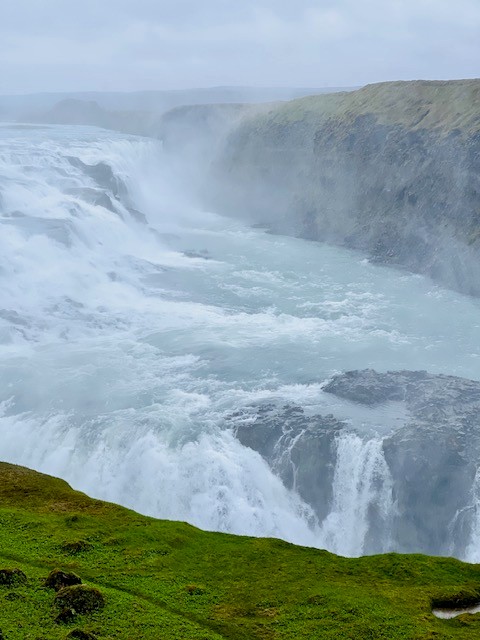
Water adapts, it does not resist unnecessarily. It follows the path of least resistance while remaining immensely powerful over time. Rather than forcing reality, it works with reality. Instead of reacting impulsively, it observes carefully before responding.
This does not mean passivity or weakness. Water can reshape entire landscapes through patience and persistence.
The strongest leaders increasingly demonstrate qualities associated with this “water method”:
• steadiness under pressure
• emotional regulation
• calm discernment
• adaptability
• deep listening
• perspective
• and the ability to avoid becoming consumed by reactive emotion
In a volatile world, these may become some of the most valuable leadership capacities of all.
Perception Shapes Experience
One of the most overlooked aspects of inner strength is perception itself.
A Course in Miracles expresses this idea in a simple but profound line:
“I could see peace instead of this.”
This is not denial of difficulty. It is an invitation to reconsider the way experience is interpreted.
Two people can encounter the same external event yet respond in entirely different ways internally. One collapses into fear or anger, another remains calm, reflective and capable of wise action.
The difference is often not the event itself, but the consciousness through which the event is perceived.
The writer James Allen expressed a similar principle in As a Man Thinketh. He argued that the quality of our inner thinking gradually shapes the quality of our outer lives. Circumstances matter, but our relationship to those circumstances matters just as much.
Inner strength therefore begins with developing awareness of how we think, react and interpret experience.
The Leader is not one Unified Self
One of the more fascinating psychological insights into human behaviour came from the philosopher and Fourth Way teacher P. D. Ouspensky.
Ouspensky argued that human beings are not psychologically unified in the way they imagine. Rather than possessing one stable identity, we consist of many competing impulses, moods, fears, desires and roles — each temporarily taking control.
At one moment a leader feels confident and visionary. At another they become anxious, defensive or emotionally reactive. Different “selves” emerge under different pressures.
Modern psychology now describes similar phenomena through concepts such as subpersonalities, parts work and ego states.
The practical implication is significant: leadership failure is often less about competence and more about unconscious identification with reactive patterns.
Inner strength develops when individuals learn to observe these patterns without becoming fully identified with them. Instead of:
“I am angry.”
the inner shift becomes:
“Anger is arising within me.”
That small change creates psychological space. It allows for awareness instead of automatic reaction.
The Practice of Self-Observation
The Fourth Way described this process as “self-remembering” — simultaneously being aware of the external world while also remaining aware of oneself within it.
Most people lose themselves entirely in thought, emotion and reaction. Self-observation interrupts that automaticity.
The leader begins watching:
• thought patterns
• emotional triggers
• defensive reactions
• approval-seeking
• fear
• and habitual behaviour
This is not self-criticism, it is conscious observation.
Over time, this process weakens identification with reactive states and strengthens what many traditions call the observing self.
In practical leadership terms, this creates:
• better judgement
• reduced impulsivity
• greater emotional balance
• and improved decision-making under pressure
The leader becomes less dominated by momentary emotional weather.
Healing as a process of Letting Go
Modern culture often frames development as accumulation: more skills, more achievement, more productivity and more optimisation.
Yet many healing traditions suggest that genuine inner development is often an undoing process.
Inner strength frequently emerges not through adding more layers, but through gradually releasing what is false:
• inherited conditioning
• destructive beliefs
• unconscious fear
• compulsive striving
• and outdated identities
This is why stillness, reflection and contemplative practices are increasingly attracting attention among high-performing individuals. Beneath the noise of constant stimulation, many people intuitively sense the need to reconnect with something deeper and more stable within themselves.
Stillness and the Return to Being
One of the great imbalances of modern leadership culture is the overemphasis on doing at the expense of being.
Many individuals spend years operating in continuous mental activity without ever learning how to become inwardly still.
Stillness meditation traditions point toward a different possibility. When the nervous system settles and mental noise quietens, a different quality of awareness begins to emerge. Perspective returns, emotional intensity softens and clarity increases.
The Australian psychiatrist Dr. Ainslie Meares observed profound psychological and physiological improvements in patients through deep relaxation and stillness-based practices. In the Taoist tradition there is Wu Wei, which can be translated as ‘achieving without effort,’ emerging from stillness, inner alignment and harmony with the deeper flow of life.
In leadership terms, stillness creates space between stimulus and response. It becomes possible to act consciously rather than mechanically and this may ultimately be one of the defining capacities of mature leadership.
The Future of Leadership may be more Conscious
For decades leadership development focused primarily on strategy, capability and performance. These remain important. But increasingly it appears that another layer may determine whether leaders can sustain effectiveness over time. That layer concerns consciousness itself.
Can the leader observe themselves?
Can they regulate emotion under pressure?
Can they avoid becoming consumed by ego, fear or reactivity?
Can they remain steady amid uncertainty?
Can they act from discernment rather than impulse?
The leaders most capable of navigating complexity may not be the loudest, most forceful or most dominant, they may instead be those who cultivate:
• perspective
• self-awareness
• adaptability
• emotional balance
• and connection to a deeper inner centre
Conclusion
As Sir David Attenborough once observed: “If we are to continue to exist, we will require more than intelligence. We will require wisdom.”
Ultimately, inner strength is not about escaping the world. It is about learning how to meet the world differently. It is the gradual movement from reaction to perception, from force to clarity, from fragmentation to integration and from outer performance alone toward a more grounded and conscious way of being. As A Course in Miracles observes, the world is “the outside picture of an inward condition.” The quality of our leadership, relationships and experience therefore reflects, to a remarkable degree, the quality of the consciousness from which we live and act.
